The Challenge
Despite the 2022 Pretoria Peace Agreement, ongoing violence and displacement in Tigray, Ethiopia, have deepened existing inequalities and created new risks, particularly for women and marginalised groups. Conflict-related sexual and gender-based violence (CRSGBV), economic hardship, and exclusion from decision-making continue to shape life in communities marked by militarisation and fragile recovery. For women and girls, especially those displaced, the burden of caregiving, income generation, and protection from violence has become overwhelming. Conflict has also fragmented social cohesion, with aid distribution tensions and intergroup mistrust threatening the stability of recovery efforts.
Our Approach
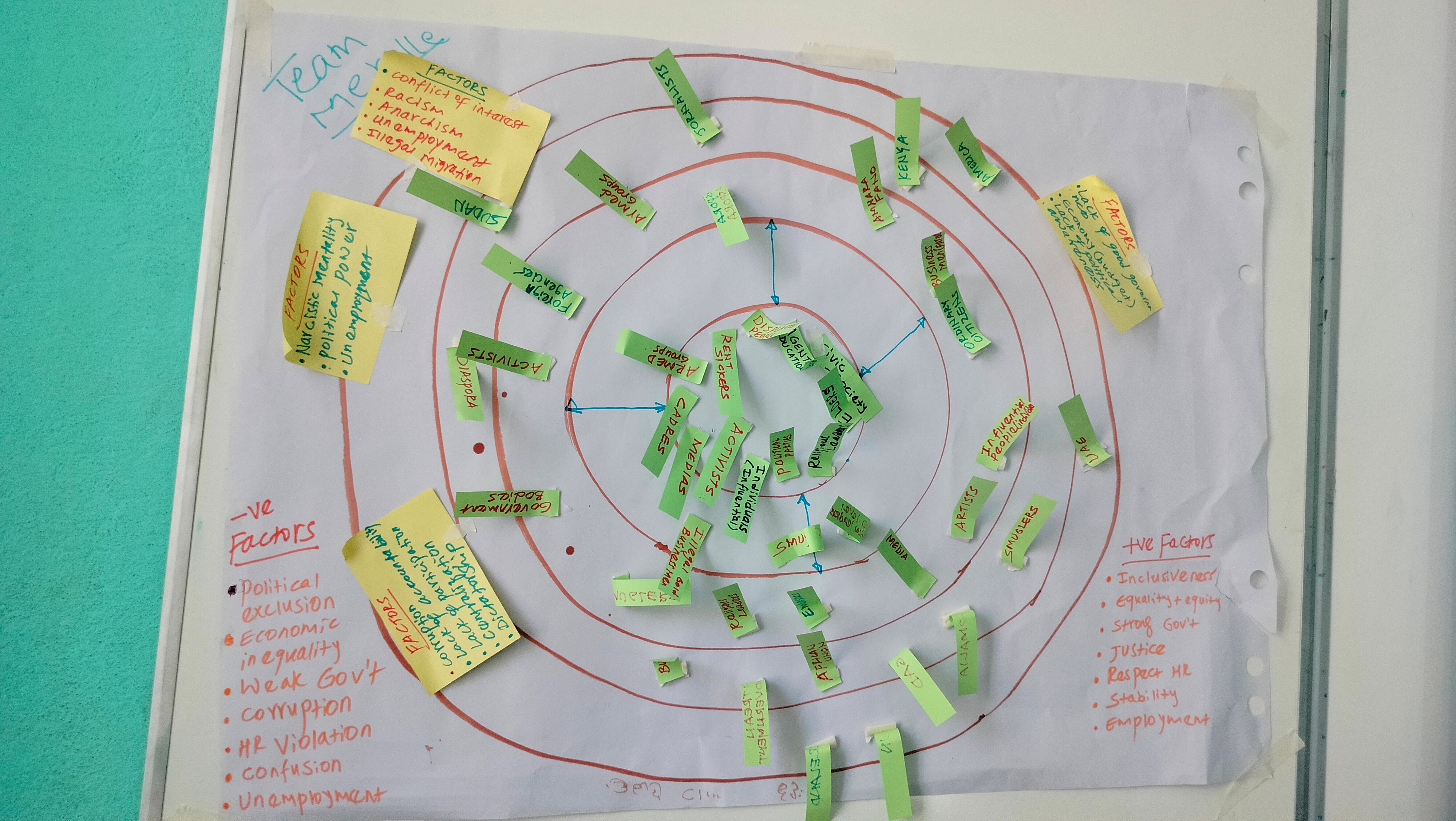
Without a nuanced understanding of how gender dynamics intersect with conflict drivers, humanitarian interventions risk reinforcing harmful norms or worsening local tensions. Based on this understanding we conducted a conflict- and gender analysis prior to a humanitarian program’s start in Tigray. The analysis aimed to bridge programming with policy frameworks such as Sustainable Development Goal 5.2, the African Union’s Strategy for Gender Equality & Women’s Empowerment (GEWE), the East African Communities’ Gender and Community Development Framework, EU Gender Action Plan III and donor requirements, while grounding them in lived realities across Adwa, Adigrat, Shire, and Mekelle. Using an intersectional feminist framework, we combined qualitative and quantitative methods to unpack how militarism, displacement, and harmful social norms intersect with structural inequality and persisting conflict drivers. Through feminist participatory action research (FPAR) workshops, focus group discussions, and interviews with experts on conflict related sexual and gender based violences (CRSGBV), students, religious leaders, and community-based organisations, we identified both dividers and connectors shaping peace and recovery in Tigray. Grounded in Do No Harm, trauma-informed, and strengths-based principles, the process not only surfaced the gendered impacts of conflict but also fostered partner ownership. Partners were supported to co-analyse their own interventions, reflect on power dynamics, and strengthen their capacity through embedded training on Do No Harm, Gender and Conflict Analysis.
The Results
For partners, a structured, participatory and dialogical process offered more than a report: it became a space for shared learning, exchange, and renewed strategic clarity. It helped align programming with their vision and mission, stayed true to the realities of the communities they work with, and emphasised the importance of survivor-centered, intersectional approaches. The analysis also revealed systemic patterns of exclusion and pathways toward inclusive recovery already reflected in partners’ strengths and strong ties to the communities this project seeks to support. Our strategic recommendations continue to guide efforts to strengthen protection mechanisms, support survivor reintegration, diversify economic opportunities, and promote gender-sensitive governance and peacebuilding. Konrad Fentzloss, who managed the Humanitarian Aid project with Jugend Eine Welt highlighted how this collaborative process and analytical approach translated into immediate value for project implementation: “Thanks to the Gender and Conflict Analysis conducted by trans:verse, we were able to integrate valuable recommendations right from the project start, ensuring activities addressed both urgent needs and long-term recovery. The unique combination of an international gender expert and a local conflict specialist from Tigray brought both analytical depth and cultural insight, allowing us to design interventions that are context-sensitive, survivor-centered, and inclusive of marginalised groups.”